incense
Computer-generated voice, not a recording. It may differ from the pronunciation guide.
In short
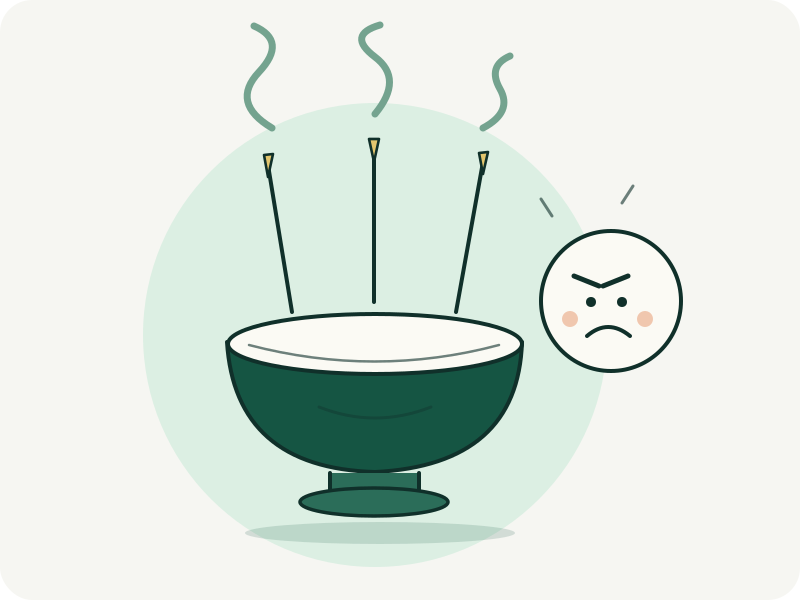
Incense is a material burned for its fragrance. As a verb, incense can mean to make someone very angry, especially in the form be incensed by or at something.
What does incense mean?
A scent and a strong reaction
As a noun, incense names material burned to release a fragrance. It is normally uncountable: you can buy some incense or several incense sticks.
In the anger-related verb sense, something incenses a person. The passive form is useful: someone may be incensed by a decision or at an unfair remark.
Why does the pronunciation change?
The noun has stress on the first syllable: IN-sense. The verb meaning to make angry has stress on the second: in-SENSE.
That contrast describes these two meanings. It is not a rule for every use: Merriam-Webster also records a verb meaning to offer or perfume with incense, pronounced with first-syllable stress.
Related words
nettle can mean to irritate, while pique can describe irritation involving hurt pride. The anger-related sense of incense emphasizes a very strong reaction.
Where does it come from?
The noun and the anger-related verb have histories connected with Latin incendere, meaning to set on fire. Dictionaries differ over the verb's precise route into English, so the shared fire-related background is clearer than the exact borrowing path.
How to use it in a sentence
“A thin trail of smoke rose from the incense burner.”
“The unexplained charge incensed the customers.”
“She was incensed by the committee's unfair decision.”
Sources and updates
- incense, Cambridge Dictionary. Checked November 2, 2026.
- Incense Definition & Meaning, Merriam-Webster. Checked November 2, 2026.
- Incense - Etymology, Origin & Meaning, Online Etymology Dictionary. Checked November 2, 2026.
Definitions and examples are written in our own words from the sources above. Published .