Music & Culture
English horn
Computer-generated voice, not a recording. It may differ from the pronunciation guide.
In short
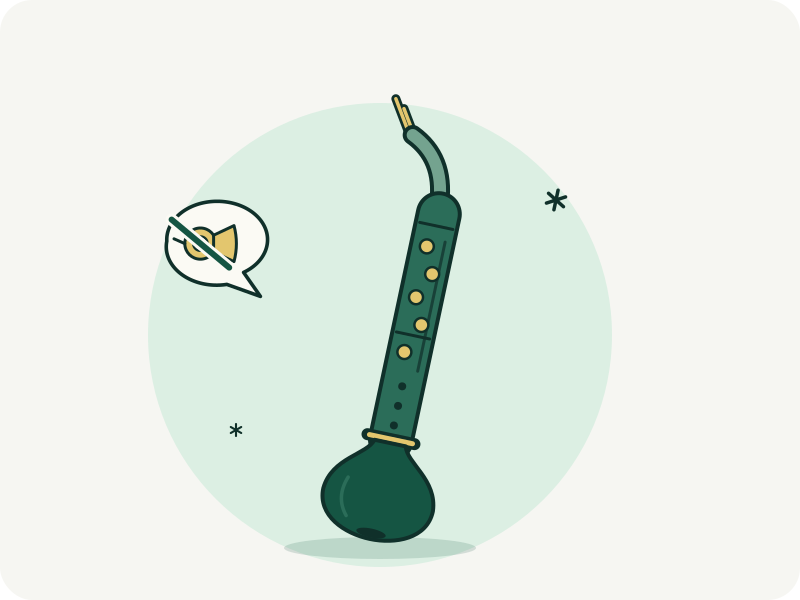
The English horn, also called cor anglais, is a double-reed woodwind instrument closely related to the oboe. It has a longer body and sounds a perfect fifth lower than an oboe.
Despite its name, it is not a brass horn. Its association with England is historically uncertain.
01 Meaning
What does English horn mean?
Not really a horn
Although its name suggests a brass horn, the English horn is a double-reed woodwind. Its oboe-family construction is the defining distinction. It sounds a fifth lower than the ordinary oboe, and orchestral scores treat it as a transposing instrument.
A name with competing explanations
The 1911 Encyclopædia Britannica offers two suggestions. One is that cor anglais is a corruption of cor anglé, “angled horn”, after the bend in early instruments. The other is that it recalls a hunting horn said to be used in England, an idea the entry calls “not a happy one”. It treats the origin as uncertain, and so does this page.
Cor anglais
Cor anglais is especially common in British musical usage; the instrument is not the French horn.
02 Word origin
Where does it come from?
The name English horn is a translation of French cor anglais. Explanations for why it was called English differ, and the historical origin of that label is not settled; the instrument belongs to the oboe family rather than the brass-horn family.
03 In context
How to use it in a sentence
“The English horn carried the melancholy melody in the orchestra.”
“The composer wrote a solo for English horn instead of oboe.”
Sources and updates
- Cor anglais, 1911 Encyclopaedia Britannica via Wikisource. Checked October 21, 2026.
- cor anglais, Oxford Advanced Learner’s Dictionary. Checked October 21, 2026.
- English horn, Cambridge Dictionary. Checked October 21, 2026.
- English horn, Merriam-Webster. Checked October 21, 2026.
Definitions and examples are written in our own words from the sources above. Published .