Language & Culture
blather
Computer-generated voice, not a recording. It may differ from the pronunciation guide.
IPA is the British pronunciation listed by Wiktionary. The "th" is voiced, as in "bother".
In short
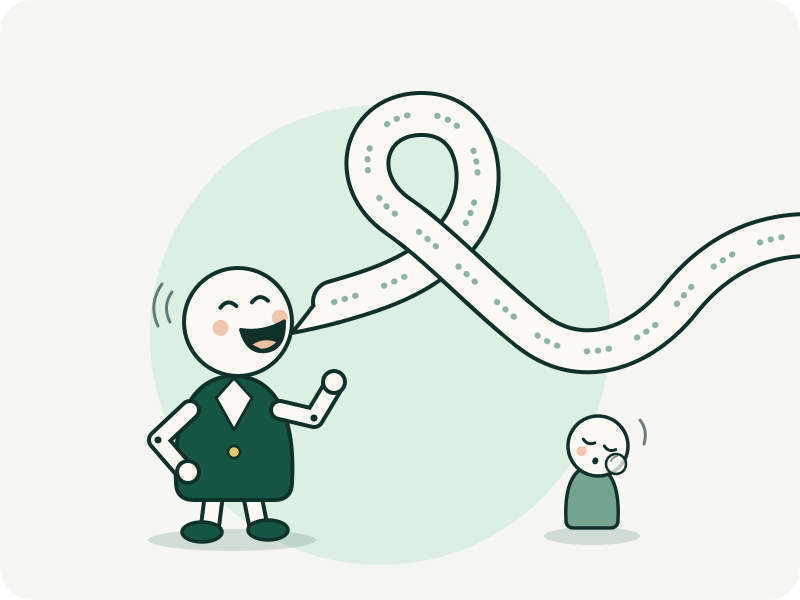
To blather is to talk at length without saying anything of much value. As a noun, blather is that kind of talk.
It is usually a mild put-down rather than a serious insult.
01 Meaning
What does blather mean?
Blather works as both a verb and an uncountable noun. Wiktionary labels it derogatory, which fits how it is used: calling someone’s speech blather implies that it is wordy, foolish or empty.
The transitive verb adds a small extra shade. To blather something is to say it foolishly, or to say it in an overly wordy way. Wiktionary lists blither as a synonym of the noun.
02 Word origin
Where does it come from?
Blather comes from Middle English bletheren or bloderen, which came from the Old Norse blaðra, "to speak inarticulately or talk nonsense". Related words include Scots blether and Norwegian bladra.
03 In context
How to use it in a sentence
“I stopped listening halfway through his blather about the weather.”
“They blathered on for an hour without reaching a decision.”
Sources and updates
- blather, Cambridge Dictionary. Checked October 20, 2026.
- blather - Origin and history, Online Etymology Dictionary. Checked October 20, 2026.
- blather, Wiktionary. Checked October 19, 2026.
Definitions and examples are written in our own words from the sources above. Published . Updated .